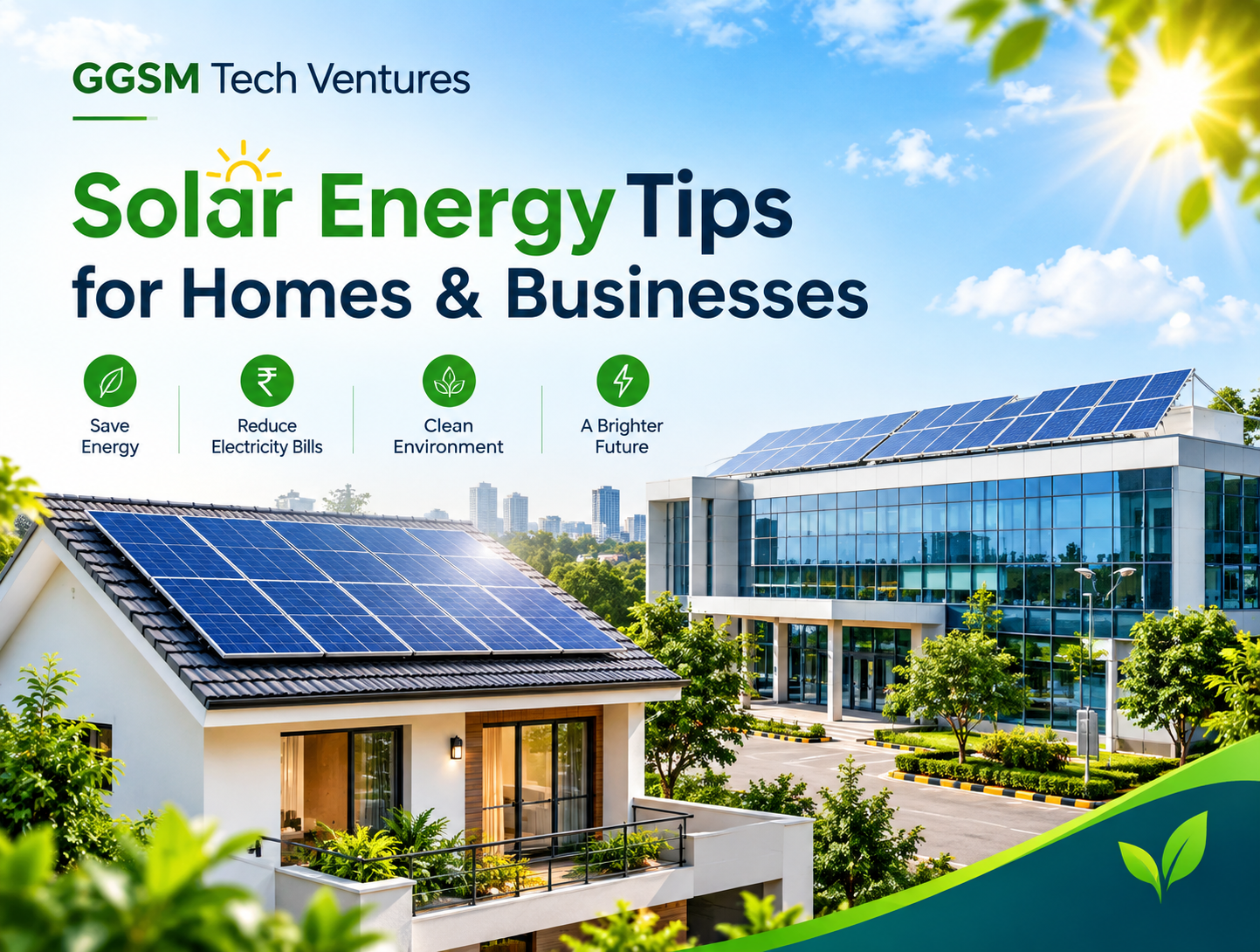
Solar Energy Tips for Homes & Businesses
Solar energy is becoming an increasingly practical solution for homes and businesses looking to generate clean electricity, manage energy costs and reduce dependence on conventional power sources. With the right solar system design, quality components, professional installation and regular maintenance, solar power can support long-term energy needs.
Whether you are planning a rooftop solar system for your home or a larger installation for an office, shop, factory or commercial property, understanding the basics can help you make better decisions.
1. Understand Your Electricity Consumption
Before installing solar panels, check your electricity bills and understand your average monthly consumption.
For homes, factors such as air conditioners, refrigerators, water pumps, televisions and other appliances affect electricity usage. For businesses, machinery, lighting, computers, cooling systems and operating hours can significantly influence the required solar capacity.
A proper assessment helps determine the appropriate system size instead of choosing a standard package.
2. Choose the Right Solar System Size
Solar system capacity should be based on your electricity consumption, available roof space, shading conditions and future energy requirements.
Residential solar systems can be designed according to household consumption, while commercial and industrial systems may require larger capacities and more detailed load analysis.
A professional site assessment can help identify the suitable panel capacity, inverter, structure and electrical requirements.
3. Select Quality Solar Panels and Components
The quality of your solar components can affect system performance and long-term reliability.
When selecting a solar system, consider:
Solar panel technology and efficiency
Inverter quality
Mounting structure
ACDB and DCDB protection
Solar cables and connectors
Earthing and electrical safety
Monitoring systems
Manufacturer warranty and support
GGSM Tech Ventures focuses on customized solar solutions and currently highlights Tata Bifacial TOPCon solar modules among its component offerings.
4. Make Sure Your Roof Is Suitable
A good rooftop solar installation requires sufficient usable space and suitable structural conditions.
Before installation, consider:
Roof size and orientation
Shade from trees or nearby buildings
Roof condition
Structural strength
Access for maintenance
Cable routing
Water drainage
Avoid installing panels in areas that remain heavily shaded for significant parts of the day.
5. Keep Solar Panels Clean
Dust, leaves, bird droppings and other deposits can reduce the amount of sunlight reaching the panel surface.
Regular visual inspection and appropriate cleaning can help maintain generation. Cleaning requirements depend on your local environment, dust levels, weather and system performance.
Solar panels generally require relatively little maintenance, but they should not simply be ignored after installation.
6. Monitor Your Solar System
Smart monitoring can help homeowners and businesses understand how much electricity their system is generating.
Monitoring can help you identify:
Daily electricity generation
Changes in system performance
Inverter alerts
Unexpected drops in output
Energy consumption patterns
GGSM Tech Ventures provides smart solar monitoring as one of its solar services.
7. Understand Net Metering and Subsidy Options
For eligible rooftop solar installations, net-metering and government incentive programs can affect the overall economics of a project.
Homeowners should check the current eligibility requirements, applicable subsidy rules and DISCOM procedures before making a purchase. Government programs and requirements can change, so always verify the latest information through the relevant official authorities.
For example, the PM Surya Ghar scheme has contributed to significant growth in residential rooftop solar adoption in India, including Uttar Pradesh.
8. Businesses Should Consider Their Daytime Load
Solar generation generally occurs during daylight hours. Businesses that consume substantial electricity during the day may therefore be able to use a significant portion of their solar generation directly.
Offices, warehouses, factories, schools, hospitals, shops and other commercial properties can assess their daytime electricity consumption when planning a system.
For larger projects, factors such as load profile, available roof area, financing, electrical infrastructure and future expansion should be evaluated.
9. Don’t Focus Only on the Initial Price
The cheapest quotation is not necessarily the most suitable solution.
When comparing solar proposals, consider:
Component quality
System capacity
Installation standards
Warranty
Monitoring
Maintenance support
Expected generation
Electrical protection
After-sales service
A properly designed system can provide value over many years, so the complete system and support package should be considered.
10. Choose Professional Installation and Support
Solar installation involves electrical connections, mounting structures, inverter configuration, safety protection and commissioning.
Professional installation helps ensure that the system is designed and installed according to the property’s requirements.
GGSM Tech Ventures describes its process as site assessment, system planning, installation, testing and commissioning, followed by ongoing monitoring and maintenance support.
Solar Energy for a Smarter Future
Solar energy can be a practical option for both homes and businesses. The key is to choose a system based on actual electricity consumption, roof conditions and long-term requirements.
From residential rooftop systems to commercial and industrial installations, the right planning can make solar easier to manage and maintain.
Looking for a customized solar solution for your home or business?
GGSM Tech Ventures provides solar installation, monitoring, subsidy assistance and maintenance solutions for customers across Uttar Pradesh.
FAQs
1. Is solar energy suitable for both homes and businesses?
Yes. Solar systems can be designed for residential properties as well as offices, shops, factories, warehouses and other commercial or industrial buildings.
2. How do I know what solar system size I need?
System size depends on your electricity consumption, roof space, shading, load requirements and desired energy generation. A professional site and electricity-bill assessment can help determine the suitable capacity.
3. Do solar panels need regular maintenance?
Solar panels are generally low-maintenance, but regular inspection, cleaning and performance monitoring can help maintain system performance.
4. Can solar panels work during winter?
Yes. Solar panels continue generating electricity during winter as long as sunlight is available. Generation can vary depending on sunlight hours, weather, temperature, shading and other conditions.
5. Should businesses install solar panels?
Businesses can evaluate solar based on their electricity consumption, daytime load, available installation space and project economics. Commercial and industrial solar systems can be customized according to the property’s requirements.
6. What should I check before installing rooftop solar?
Check your electricity consumption, roof condition, available space, shading, structural suitability, electrical requirements and applicable local regulations or DISCOM procedures.
7. What is net metering?
Net metering is a mechanism under applicable regulations that can allow eligible rooftop solar consumers to export surplus electricity to the grid and receive corresponding credits according to the applicable rules.
8. What are bifacial solar panels?
Bifacial solar panels can generate electricity from light received on both sides of the module when installation conditions allow. Their actual performance depends on factors such as mounting height, surface reflectivity and site conditions.
9. How can I monitor my solar system?
A smart monitoring system can provide information about electricity generation and system performance. GGSM Tech Ventures offers smart solar monitoring as part of its services.
10. Why is professional solar installation important?
Professional installation helps ensure correct system sizing, mounting, electrical connections, safety protection, testing and commissioning.