Net Metering & Solar Subsidy
Solar power can help homeowners and businesses generate electricity from sunlight and reduce their dependence on conventional grid electricity. Along with installing a solar system, customers may also need to understand net metering and applicable solar subsidy schemes.
The availability, eligibility, subsidy amount, application process, and technical requirements can vary depending on the location, consumer category, solar system type, and current government or electricity-distribution regulations.
What Is Net Metering?
Net metering is a grid-connected electricity arrangement for eligible solar power systems.
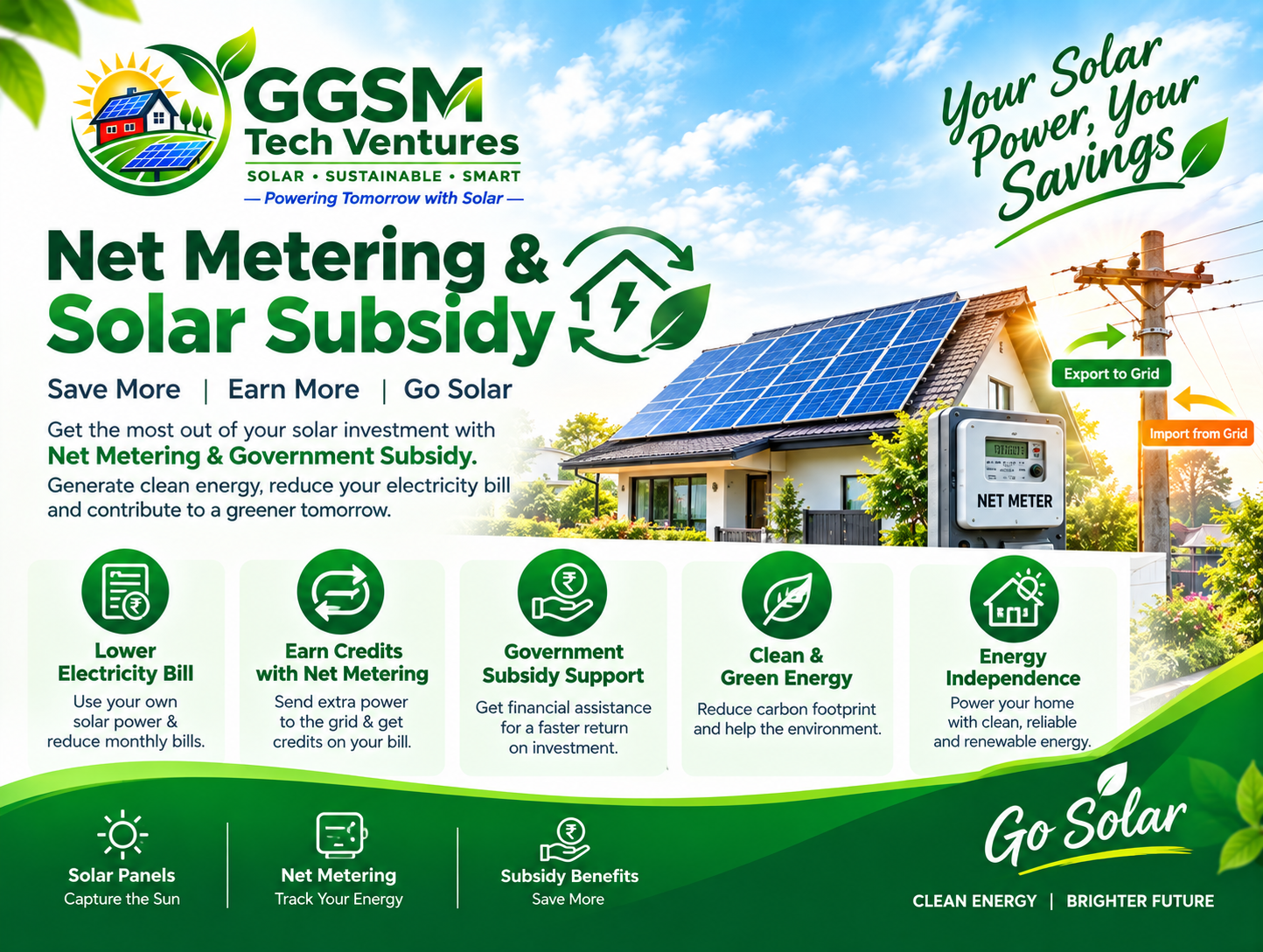
When a solar system generates more electricity than the property is using at a particular time, the eligible surplus may be exported to the electricity grid. When solar generation is insufficient, electricity can be drawn from the grid according to the applicable arrangement.
A bidirectional meter is generally used to record electricity flowing between the consumer premises and the grid.
How Does Net Metering Work?
The basic process can be understood as:
Solar Panels → Inverter → Home/Business → Grid
During the day, solar panels generate electricity. The generated power can first be used by the property.
If eligible surplus electricity remains, it may be exported to the grid. When electricity consumption is higher than solar generation, power can be imported from the grid.
The actual billing mechanism depends on the applicable electricity regulations and consumer category.
Benefits of Net Metering
For eligible consumers, a grid-connected solar arrangement may provide benefits such as:
Better utilization of solar electricity
Reduced dependence on grid power
Ability to export eligible surplus generation
Monitoring of electricity import and export
Potential reduction in electricity bills
Eligibility and financial benefits depend on applicable regulations.
What Is Solar Subsidy?
A solar subsidy is financial assistance provided under an applicable government scheme to encourage the installation of eligible solar systems.
Subsidy programs can have specific requirements regarding:
Consumer category
Property type
Solar system capacity
Approved equipment
Installation standards
Registered vendors
Application procedure
Documentation
Customers should always check the latest official scheme guidelines before applying.
Residential Solar Subsidy
Eligible residential consumers may be able to receive financial assistance under applicable rooftop solar programs.
The exact subsidy amount and eligibility depend on the current scheme, approved system capacity, consumer category, and applicable government rules.
Subsidy availability should therefore be verified at the time of installation.
Solar Subsidy Application Process
The general process may involve:
Checking eligibility
Selecting an eligible solar solution
Submitting the required application
Choosing an approved or applicable vendor
Completing solar installation
Inspection or verification, where required
Metering and grid-connection procedures
Completion of subsidy-related formalities
The actual process can differ according to the applicable scheme and electricity distribution authority.
Documents Required
Depending on the scheme and application process, customers may be asked to provide documents such as:
Identity proof
Address proof
Electricity connection details
Consumer number
Bank account details
Property-related information
Solar installation documents
The required documents should be confirmed from the relevant official authority or scheme portal.
Net Metering & Solar Subsidy Assistance by GGSM Tech Ventures
GGSM Tech Ventures helps customers understand the solar installation process and provides support related to applicable net-metering and subsidy procedures.
Our solar services include:
Residential Solar Solutions
Commercial & Industrial Solar Solutions
Solar System Design
Installation & Commissioning
Net-Metering Assistance
Solar Subsidy Guidance
Solar Monitoring
Maintenance & AMC
We help customers understand the requirements and documentation associated with their solar project.
Important Note About Solar Subsidies
Solar subsidy schemes and electricity regulations can change over time. Subsidy availability is not automatically guaranteed for every solar installation.
Before making a purchase or installation decision, customers should verify the current eligibility criteria, subsidy rules, approved vendors, and applicable electricity-distribution requirements.
Conclusion
Net metering and applicable solar subsidy schemes can make rooftop solar more accessible for eligible consumers. Understanding the requirements before installation can help customers plan their solar project properly.
GGSM Tech Ventures provides solar solutions along with support for system planning, installation, net-metering procedures, and applicable subsidy-related guidance.
Contact GGSM Tech Ventures to discuss your solar requirements and understand the applicable process for your project.
Frequently Asked Questions
What is net metering?
Net metering is a grid-connected arrangement that can allow eligible solar consumers to export surplus electricity to the grid under applicable regulations.
Is every solar system eligible for net metering?
No. Eligibility depends on the applicable regulations, consumer category, system type, capacity, and electricity-distribution requirements.
Can businesses get solar subsidies?
Subsidy eligibility depends on the specific government scheme and consumer category. Many subsidy programs are designed specifically for eligible residential consumers.
How much solar subsidy can I receive?
The amount depends on the applicable scheme, system capacity, eligibility, and current government guidelines.
Does GGSM Tech Ventures help with net metering?
Yes. GGSM Tech Ventures provides assistance and guidance related to applicable net-metering procedures for solar projects.
Can subsidy rules change?
Yes. Government schemes, eligibility requirements, and subsidy provisions can be updated, so current official guidelines should be checked before applying.